Artists 2027

The Broadmoor

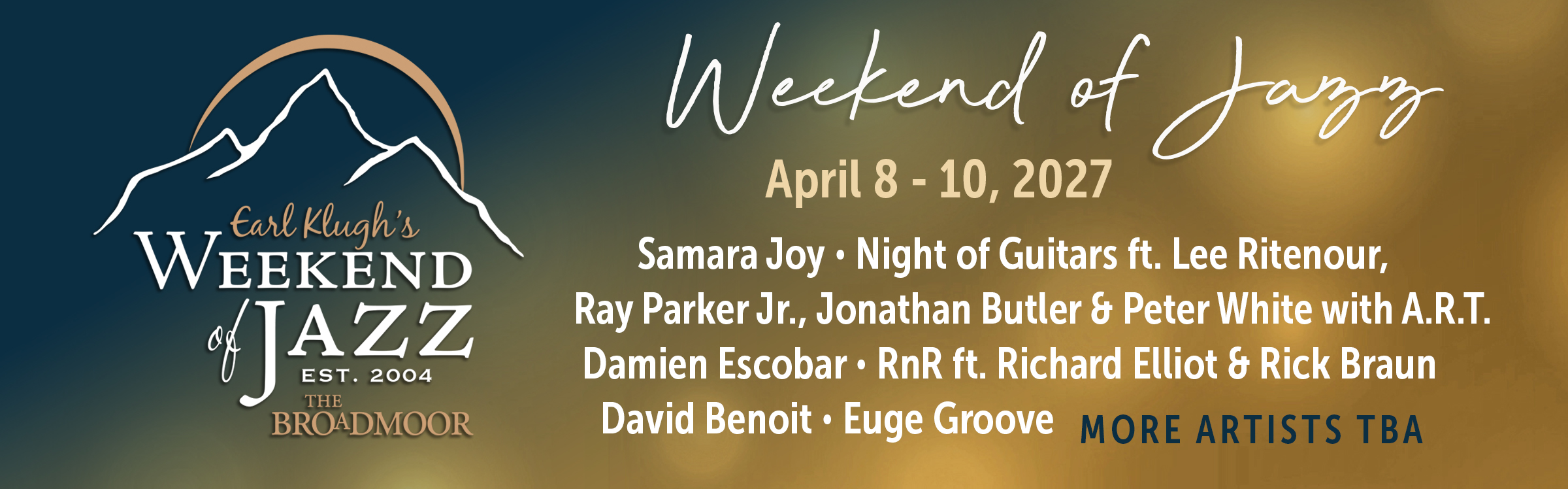
Weekend of Jazz at The Broadmoor
Join Us! Reserve Now 844-810-8205

Earl Klugh

In a career spanning almost 5 decades, GRAMMY®-winner Earl Klugh began his professional career at age 16, when renowned flautist and saxophonist Yusef Lateef heard him practicing in a small music store where the young guitarist worked while in school. That led to an invitation to record with Lateef on his 1970 recording Suite 16 where Klugh performed on “Michelle.” The following year he appeared on fellow guitarist George Benson’s White Rabbit album. He then joined Benson’s group and stayed for over a year before taking a brief, two-month spin with pianist Chick Corea’s highly charged Return to Forever band. All of that carved a path to Blue Note Records and at age 23, Klugh’s first, self-titled album was released in 1976. The rest, as they say, is history.

The Detroit-born master of the classical guitar has become one of the most imitated icons of the instrument and has been referred to as one of the key progenitors of what is often called contemporary jazz. Widely recognized as a guitarist with impeccable technique and one of the greatest guitarists in the world, Klugh is an equally prolific songwriter and producer. Composing over 250 songs, he has released over 40 records, 18 of which earned their place on Billboards Top-200, 24 have charted on Billboard’s Top-10 list of jazz albums and 6 Albums have made it to the No. 1 slot. Klugh’s recordings have received 13 GRAMMY® nominations (including one for his latest release, HandPicked) – and his collaboration with pianist Bob James, One on One, walked away with the 1980 GRAMMY® Award for Best Pop Instrumental Album.

The guitarist’s magic on stage has delighted audiences across the globe. Whether performing solo, with his quartet, electric band, ‘Little Big Band” or with renowned symphony orchestras, Klugh is a master alchemist, turning nylon strings into pure musical gold. As he notes, “The essential excitement of music-making is renewed in every studio and stage performance. Once I get into the actual song, I try to go back to what made me write the song or decide to perform it. I try to keep myself in an open mind, so I don’t reproduce the record but instead create a live performance at that moment. I play it for myself as if it’s the first time I’m doing it.”

As a composer and songwriter, Klugh’s credit appears on a wide range of recordings from artists such as Aretha Franklin, Jamie Foxx, Roberta Flack, Mary J. Blige, Kenny Loggins, Al Jarreau, Toni Braxton and many others. He has been a guest artist with musicians from Jimmy Buffett, Vince Gill, Chet Atkins, Stevie Wonder, Loggins, and Brenda Russell to jazz masters Miles Davis and McCoy Tyner and more.

Seventeen years ago, the guitarist was asked to bring jazz back to The Broadmoor Hotel and Resort in Colorado Springs and Earl Klugh’s Weekend of Jazz was born. In 2010 the guitarist added a second, east coast edition, Weekend of Jazz at Kiawah Island Golf Resort in South Carolina. Both properties are Forbes Five-Star, AAA Five-Diamond rated resorts, where Klugh enjoys spending time with the fans morning, noon and night. “The fans always amaze me,” he says. “So many have shared stories and memories of what my music and Weekend of Jazz has meant to them. It’s the most wonderful compliment I could ever receive. Weekend of Jazz is my favorite time of year!”

Artist links

Samara Joy

Few figures in jazz history have experienced the kind of meteoric rise that vocalist Samara Joy has enjoyed—especially at such a young age. At just 26, her career is nothing short of sensational.

With six GRAMMY Awards already to her name, including Best New Artist, as well as an NAACP Image Award, Joy has achieved the kind of profile typically reserved for pop celebrities. Her visibility has made her a steady presence on network television and a favorite among younger music fans, particularly on platforms like TikTok, where she has helped introduce timeless American music to new generations. Her performance history reads like a who’s who of the world’s most legendary venues and festivals, with appearances at the Newport Jazz Festival, Monterey Jazz Festival, and Montreal International Jazz Festival, as well as iconic stages including the Apollo Theater, Carnegie Hall, the Village Vanguard, and Jazz at Lincoln Center.

Joy’s rise has been accompanied by rave reviews. DownBeat called her breakout Verve Records debut Linger Awhile “a beautiful recording,” hailing her as “a silky-voiced star,” while The New York Times described her as a “rising star,” and NPR referred to her as a “classic jazz singer from a new generation.” With each performance, she has earned a reputation as a masterful interpreter of jazz standards, drawing comparisons to legendary vocalists including Sarah Vaughan, Betty Carter, Abbey Lincoln, and Carmen McRae.

A native of the Bronx’s Castle Hill neighborhood, Joy grew up surrounded by music. Her family’s musical legacy runs deep: her grandparents led the Philadelphia gospel group the Savettes, and her father, musician and songwriter Antonio McLendon, toured with Andraé Crouch and recorded his own work. As a child, Joy was captivated by classic R&B and honed her singing in her church’s gospel choir. Her journey into jazz began in her teens while attending Fordham High School for the Arts, where she won Best Vocalist at Jazz at Lincoln Center’s prestigious Essentially Ellington program.

After graduating as valedictorian, Joy studied jazz at SUNY Purchase, where she met a group of instrumentalists who would become key collaborators. While still in college, she won the 2019 Sarah Vaughan International Jazz Vocal Competition, a victory that catapulted her into the spotlight and marked the beginning of her professional career.

In 2021, Joy released her self-titled debut album on the Whirlwind label, impressing critics with her deeply expressive approach to jazz standards and her remarkable musical sensitivity. Her follow-up, Linger Awhile (2022), showcased her exceptional interpretive ability across a diverse repertoire, including Ronnell Bright’s “Sweet Pumpkin” and Fats Navarro’s “Nostalgia.” That same year, she won the GRAMMY Award for Best New Artist, elevating her public profile to new heights, with appearances on The Tonight Show, The Late Show, and Today.

In late 2023, Joy embraced her roots with the release of A Joyful Holiday, an EP featuring updated renditions of holiday classics alongside her musical family. The release was followed by successful holiday tours in 2023 and 2024, culminating in two GRAMMY Awards in 2025—Best Jazz Vocal Album and Best Jazz Performance—at the 67th Annual GRAMMY Awards.

Just a year after her Best New Artist win, Joy also released the inspirational track “Why I’m Here,” co-written with PJ Morton, which was featured in the acclaimed Shirley Chisholm biopic Shirley on Netflix, starring Regina King.

In 2024, Joy’s artistic growth continued with the release of her album Portrait, co-produced with GRAMMY-winning trumpeter Brian Lynch. Reflecting her evolution as a musician and bandleader and showcasing her deep rapport with her touring band, the project earned Joy the NAACP Image Award for Outstanding Jazz Album in 2025 and the GRAMMY Award for Best Jazz Vocal Album at the 69th Annual GRAMMY Awards in 2026. The album features her own lyrical compositions, including “Reincarnation of a Lovebird (Pursuit of a Dream),” a meditation on love and ambition built around a tune by Charles Mingus, as well as reimagined standards such as “You Stepped Out of a Dream” and “Autumn Nocturne.” “I’m still very much a student,” Joy says. “So this is only the beginning—there is much, much more to come.”

Artist links

Lee Ritenour

For Lee Ritenour, there aren’t many ‘firsts’ left to achieve. During his dazzling five-decade career, the fabled LA guitarist has taken his music to the outer limits, alighting on every genre and occupying every position in the rock ‘n’ roll firmament. He’s been an enfant terrible of ’70s fusion, a crossover star of the ’80s pop chart, an honorary exponent of Brazilian jazz, and the fingers behind ’90s supergroup, Fourplay. Ritenour’s accolades include: 45 albums, Grammy award winner, plus 16 Grammy nominations, Alumnus of the year at USC, Los Angeles’ Jazz Society Honoree (2019), plus thousands of sessions with legends such as Frank Sinatra, Pink Floyd, B.B. King, Tony Bennett, among others. And yet, when he checks the rear-view mirror, the 68-year-old acknowledges he’s never made a record like Dreamcatcher. “People have been telling me for years: ‘Rit, you gotta make a solo guitar record’. In the past, I’ve always been the band guy, the ensemble guy, the collaborative-guitar-player guy. So this was the one project I hadn’t done. And this year, I knew it was time.” Weaving tapestries of instrumental guitar and conjuring eclectic moods, the 12 tracks of Dreamcatcher rank amongst the most melodic and tinglingly beautiful in Ritenour’s catalogue. But there’s a power and purpose here, too, hinting at the darker circumstances that sparked this new record. “Our house and my studio in Malibu, California burnt down in 2018,” he recalls. “About 100 of my guitars went up in the fire, plus 40 amps, lots of music, the history of my whole career, pretty much. A week after the fire, I went to the hospital, which I’d never had to do before, for surgery to replace an aortic valve. So those incidents and the support from my family and friends absolutely went into this music. Making this record was a life-saver for me.” Dreamcatcher might have been born from personal challenges, but the record took shape against the global tragedy of Covid-19. Ritenour had already written several key tracks before shutdown. But as he settled into the makeshift studio at his new home in Marina Del Rey, equipped with little more than seven guitars, a computer interface and good intentions, the guitarist let the context flood into the music he was tracking. “It was an important album for me,” he notes. “Especially now, with everything going on in the world.” Even without lyrics, every track tells a story. Take the molten blues licks of “Abbot Kinney”, named for the fabled boulevard in Venice, California. “One day when everything was shut down,” says Ritenour, “I drove my bike there and was just devastated to find it completely empty. But then I heard this rock guitar start up. I don’t know if it was a kid, but somebody nearby had just turned it up to 10 and said, ‘Fuck it, I’m gonna have some fun’. It brought a huge smile to my face and inspired me to write that song on my Les Paul.” Likewise, anyone living through the age of Covid-19 will feel a deep affinity with “2020”: a three-part symphony in which Ritenour takes the pulse of the times. “The three parts were a reflection of what was going on this year,” he nods, “when all of a sudden everybody’s life shut down. I was thinking about the young musicians that were out of work – and people in every walk of life.” Elsewhere Dreamcatcher delves beyond the pandemic. While Ritenour strived to switch up musical styles – from the title track’s dovetailing classical guitars to the Taylor baritone that drives “Starlight’s” tumbling folk, and the mad scientist multi-tracking of “Couldn’t Help Myself” – he also ran the gamut of mood. “Because even I get tired,” he reasons, “of solo guitar albums when it pretty much all sounds the same.” As such, “For DG” salutes the harmonic sensibilities of the great producer, pianist, and long-time comrade, Dave Grusin. But it couldn’t be further from “Charleston”, whose mellow slink is laced with bittersweet thoughts on the ebb and flow of US race relations. “A few years ago, I played in Charleston, South Carolina,” recalls Ritenour, “and it was charming and the people were warm, and it was a very mixed, soulful audience. Charleston has a history of the beginnings of slavery, but this was modernday Charleston, y’know? But then, a few years later, I’m writing this tune while watching the continuation of the struggle. As musicians who travel all over the world, we go, ‘What? This shit is still going on in the US?’ So it was appropriate to dedicate that song to Black Lives Matter.” Dreamcatcher not only confronts the here-and-now: it also slips back into Ritenour’s rich history. Long-standing fans will recognize “Morning Glory Jam” as a rework of the guitarist’s classic 1977 tune. “On 2015’s A Twist Of Rit, I had revisited a lot of older material, so I wanted to keep this record fresh. But one day, I remembered when I did sessions for Barry White and how there had been four or five guitar players all playing these incredible rhythm parts. That’s the kind of groove I had in my head for this new version of Morning Glory.” Casting his mind still further back, The Lighthouse shares its name with the storied LA jazz club where the teenage guitarist was to be found most nights in the mid-’60s. “I’d started playing guitar at eight, and by 12, I was very serious. Everybody’s number was in the phonebook back then, right? So my dad – who was an amateur piano player and always very supportive – called up Joe Pass and Barney Kessel and asked them to give me a guitar lesson. Barney ended up recommending this incredible teacher, Duke Miller, and that was the foundation of all my playing. The Lighthouse was this very funky jazz club where I met Wes Montgomery. By the age of 16, I’d take the car over there in the late afternoons and just watch the bands soundcheck.” Whatever genre you were into, recalls Ritenour, the guitar scene at that magical juncture in the mid-’60s was hard to beat. “In every field, there were legends. In jazz, you had Joe Pass, Wes Montgomery, Barney Kessel, Howard Roberts, Jim Hall, Pat Martino. In Blues, B.B. King, Albert King, John Lee Hooker. In Rock, Jimi Hendrix was coming, Clapton and Beck were already there. In Country, you had Chet Atkins, and the all time great classical guitar master, Segovia, and Sabicas, and Paco de Lucia for Flamenco! Great guitar playing was everywhere you turned, and I loved them all…How could you not? Those eclectic early tastes served Ritenour well. The jazz giants at The Lighthouse were a passion for life: just check out his love-letter to the great Mr Montgomery on 1993’s Wes Bound. But from the day he lucked into his first session for The Mamas And The Papas at age 16, Ritenour had the widescreen musicality to forge a career as one of LA’s busiest session men. “I remember John Phillips had this incredible studio in his Beverly Hills mansion and I just thought, ‘This is what I want’. As for my favorite and memorable sessions, I remember getting called by Bob Ezrin to record on “One Of My Turns” and “Comfortably Numb” on Pink Floyd’s, The Wall…incredible. And then there was Quincy Jones producing George Benson’s, “Give Me the Night” album and all of us waiting ‘til 4am for Stevie Wonder to show up and play a song he’d written for George’s album…Ha! Too many memories!” Like close friend and fellow session ace, Toto’s Steve Lukather, Ritenour was always more than a gun-for-hire. In ’76, he launched his own solo career with First Course, and managed the magic trick of following his muse while finding enviable commercial success, especially in the ’80s. “On the West Coast, fusion was just starting,” he remembers, “and we were beginning to combine the melodies of pop music, but with the sophistication of jazz. We were listening to people like John McLaughlin, Chick Corea, and then at the same time, Grover Washington Jr, David Sanborn, Bob James. So it was really a natural evolution for my own records to evolve out of that. When I finally did win a Grammy in 1985 – for “Early A.M. Attitude” – I think I was actually stuck on the freeway. But awards aren’t the reason we’re making music.” Likewise, while the jazz supergroup Fourplay scored a commercial hit with their eponymous 1991 debut album. For Ritenour, the attraction was all about the chemistry between the band members. “The magic was immediate between me, Bob James, Harvey Mason and Nathan East. You can’t draw that sort of thing up on a chart – it either works or it doesn’t. We did three albums, but then the business got so complicated that I took a pass in 1997. But there was always friendship and musical respect, and we are talking about doing one last reunion project together.” Respect was palpable, too, when Ritenour made the 2010 album, Lee Ritenour’s Six String Theory: an all-star album that drafted many of the famous friends he’d picked up along his path. “In the early days, you could never put country, jazz, rock and all these styles on the same record. The record companies would say, ‘No, you’ve got to have one theme’. But by 2010, the labels weren’t as powerful as they were, and they were looking for interesting projects. I went to my buddy Steve Lukather, and George Benson and B.B. King, and they all said yes. We opened it up to players like Joe Bonamassa and John Scofield – and everyone played their ass off” Collaboration might be a constant, but in a career full of left-turns, Dreamcatcher is another thrilling detour for Lee Ritenour. Both by necessity and design, this latest album represents music in its purest form: one man, channelling his headspace and the history unfolding around him, using the instrument that has sustained him all these years. There is a first time for everything and there has never been a better time for “Dreamcatcher”. “I’ve never done anything like this before and it’s an important missing piece in my guitar history. It was inspiring and it was meant to happen this year, in these times – after a lifetime of playing the guitar,” he considers, “this project reaffirmed just how much I love the guitar.” Bonus Tracks, Tell me about the two bonus tracks for Japan – “More Stories” and “Thank You Dreamcatcher”? “More Stories… There were a series of songs that I wrote on the Yamaha classical guitar – Via Verde, More Stories, and Dreamcatcher. Some of the harmonies and the way I was interpreting playing solo guitar was somewhat similar on those three songs. So that was the first time where I wanted to make sure there was going to be enough variety on the record. Because even I get tired of great solo guitar albums when it pretty much sounds the same. So that was very much the challenge I gave myself. That’s why there are different sounds on the record, the different approaches, and the different compositions – and even a different way of playing sometimes. And then, “Thank You Dreamcatcher” was one of the first songs that I wrote for the record on the baritone guitar. I always liked that song very much. I always liked that song very much… It’s one of my favorite tunes on the record.”

Artist links

Jonathan Butler

Jonathan Butler Bio – from Website

Jonathan Butler is a singer-songwriter and guitarist who leads a life few can imagine. Born in South Africa under the shadow of apartheid and raised in poverty, Butler was the first non-white artist to be played on South African radio and appear on national television. Though his musical abilities would take him away from the world he grew up in, Jonathan would neither forget the plight of his fellow South Africans, nor the man that led them to freedom. It is for this reason Nelson Mandela credits Butler’s music as having inspired him during his imprisonment. In more ways than one, Jonathan Butler is representative of South Africa.Jonathan’s story begins at a very young age when his father presented him with a homemade one-string guitar. Little did his father realize that he was giving way to a musical phenomenon. From then on, Jonathan’s musical gifts grew by leaps and bounds. In his early teens Butler won a local talent contest, affording him the opportunity to perform with a touring musical company throughout South Africa. On occasion he would perform at lavish concert halls for whites only, where he would not be allowed to use the bathroom, and the very next night he would perform in a dilapidated local township. Ultimately, his ticket to a new life was music. At thirteen, Jonathan’s talents caught the eyes and ears of the British record producer Clive Caulder. He was signed to Caulder’s Jive Records and the rest is history. Jonathan’s first single broke down racial barriers becoming the first song by a black artist played by white radio stations in South Africa and won the South African equivalent to a GRAMMY®.His commitment to his craft came to fruition with his self-titled debut album, which received a GRAMMY® nomination for the pop hit “Lies.” An instrumental “Going Home” earned him another GRAMMY® nomination and the mid-tempo ballad “Sarah, Sarah” confirmed Butler’s place in popular music. In 2025, Butler received an Honorary Doctorate in Philosophy from the prestigious Stellenbosch University in South Africa. A religious and spiritual man, Butler dedicates his life to being a devoted father and grandfather, and a caring citizen to his homeland, South Africa. And in spite of all the hardships, Jonathan Butler has an air of playfulness and quiet resilience that is easily visible in his passionate performances.

Artist links

Peter White

PETER WHITE

Light of Day

Gearing up for the release of his highly anticipated 17th album Light of Day in early 2025, veteran guitarist and contemporary jazz icon Peter White is celebrating a series of key personal and professional milestones.

Having just turned 70, the British born artist says of the new collection, “I think this recording is one of the best I’ve ever made. I have as much enthusiasm and energy for music as I did in my twenties!” 2024 also marked his 50th year as a professional musician, which began with a gig in a Top 40 band at a holiday resort in Perranporth, a seaside resort town in the Southwest corner of England – six months before he met and officially launched his career recording and touring with singer/songwriter Al Stewart (and co-writing Stewart’s classic “Time Passages”).

Though early on in his career as a sideman for Stewart and later, Basia) White could never have anticipated becoming an acclaimed instrumental recording artist, let alone a popular headliner, 2025 marks 35 years since he dropped his debut album Reveillez-Vous. In that time, he has had four #1 Billboard Contemporary Jazz albums (Smile, Groovin’. Here We Go) and four #2’s (Glow, Confidential, Good Day, Playin’ Favourites), in addition to seven #1 Smooth Jazz Airplay hits, including “What Does It Take (To Win Your Love)” (16 weeks at #1), “Bright” (13 weeks) “Head Over Heels” (nine weeks) “Mister Magic” (eight weeks) and “Bright.” His most recent #1 was as a featured artist on Carol Albert’s #1 hit “Sunshine Yellow.”

Between the guitarist’s most recent traditional release Groovin’ in 2016 and now, he enjoyed another chart success in 2019 with Music For STARLUX Airlines, a set of six extended tracks originally created for in-flight entertainment on the Taiwanese-based airline. While his assignment on that album was to create beautiful, relaxing melodies, White’s happy to say that “all the drama that was intentionally absent on the STARLUX project is on Light of Day. There are a lot of exciting twists and turns in the production throughout.”

Originally proposed for that project, the eight minute, off the beaten path (and perfectly titled!) “Odyssey” dynamically blends the best of both approaches – an expansive arrangement, an excursion full of different moods, twists and turns, uncertainty and explosive excitement. Very unusual for an artist in a genre driven by radio friendly singles, White attributes this tune’s sense of daring to the magic he felt listening to innovative, revolutionary Beatles classics like “A Day in The Life” growing up. “I love music that takes me on a journey, whether it’s pop, jazz or classical,” he says. “I’m at a point in my career where I’m less concerned about how people will react and thinking more like, does this piece of music capture my senses and take me to a place I want to be?”

Because much of the recording was done during the pandemic, White titled the album Light of Day to express his view that there’s always light at the end of the tunnel and reasons to have hope and optimism. Bringing this aesthetic to colorful sonic life, he enhances his trademark, instantly recognizable acoustic melodies with bass, recorder and keyboards, while also bringing hypnotic electric sitar-guitar and dreamy accordion into the mix on the charming, tropical tinged light funk romp “Carefree.”

White gets the album off to a rollicking, rip-roaring start with the buoyant “Catalonia,” whose spirit of high adventure echoes some of the guitarist’s earlier epic tunes like “Ramon’s Revenge” (from Good Day) and “Don Quixote’s Final Quest” (from Smile). Another track with a similar sense of freewheeling, whimsical fun is “Overdrive,” which rolls like a fast-paced spy movie score (with lots of imagined car chases) while fusing the intense exotica of Kenny Herrera’s booming percussion with White’s classic snappy acoustic, soaring horns, an exciting flugelhorn solo by Ilya Serov and the Americana-flavored harmonica accents of Marc Macisso, who also plays saxophone. The keyboards and programming were performed by Michael Egizi.

At the opposite end of the emotional spectrum, White fulfills a career-long goal by having legendary saxophonist Ernie Watts join him on the soulful, sensually romantic ballad “Enchanted” (which, ironically, the guitarist wrote the night before their session!) and taps one of smooth jazz’s most exciting young artists, saxophonist Vincent Ingala to create a passionate duet with his guitar on the heartfelt ballad “I Love You Still.” Also in this gentler vein is the lilting, graceful tune “Till I See You Again,” White’s tribute to one of the genre’s most impactful and beloved artists, the late guitarist Nick Colionne.

Other infectious gems leading to the soaring, illuminating great reveal of the final track “Light of Day” are the seductively grooving (courtesy of White’s programming ace DC), atmosphere-rich “Cityscape,” a sparkling duet entwining the acoustic guitar and guest Rick Braun’s breezy flugelhorn; and the sweetly infectious “Dreaming of You,” whose soaring ambience caresses White’s acoustic melody throughout.

The collection also includes contributions from some of the genre’s most renowned studio musicians – bassists Dave Dyson, Nate Phillips and Roberto Vally and drummer Eric Valentine, in addition to Shannon Kennedy (flute) and Sascha Brezina (organ). Two of the more unique credits are Matthew Hagar (fingersnaps and sonic guidance) and White’s longtime friend and musical associate Skipper Wise (additional guidance and encouragement).

Initially influenced by folk music and The Beatles, White learned fingerstyle picking via classic recordings by Simon and Garfunkel and Joni Mitchell – and counts the lesser-known Hank Marvin, guitarist of the UK band The Shadows, as another important early inspiration. He also loved the British blues of bands like the early lineup of Fleetwood Mac and fans of his trademark acoustic string vibe can thank a random fire for destroying the first electric guitar he ever bought after going crazy for Jimi Hendrix. The reason he advises all young musicians to learn more than one instrument is that when Al Stewart first hired him, it was for his piano playing skills. His focus shifted once he got in his Spanish guitar solo on Year of the Cat’s “On the Border.” White spent two decades playing with Stewart, and all these years later plays on “Time Passages” on the singer’s latest album Al Stewart & The Empty Pockets Live.

“Once I began recording instrumental albums and they enjoyed some success, the biggest surprise of my career is that I actually became an entertainer,” White says. “Working as a sideman for years behind Al Stewart and then Basia, I never envisioned that in my future. My very first solo live performance was at the Catalina Island JazzTrax Festival in 1991, and I barely had anything to say to the audience. I later went to a performance coach and learned how to step up and convey the joy of what I was playing in my facial expressions and mannerisms. Beyond that, the most wonderful part of all this is that whatever label I was on and now with my own, I had complete freedom to create music that I loved without rules or compromise. I’m thrilled that I’m still around, playing with some of the greatest musicians in the world!”

Artist links

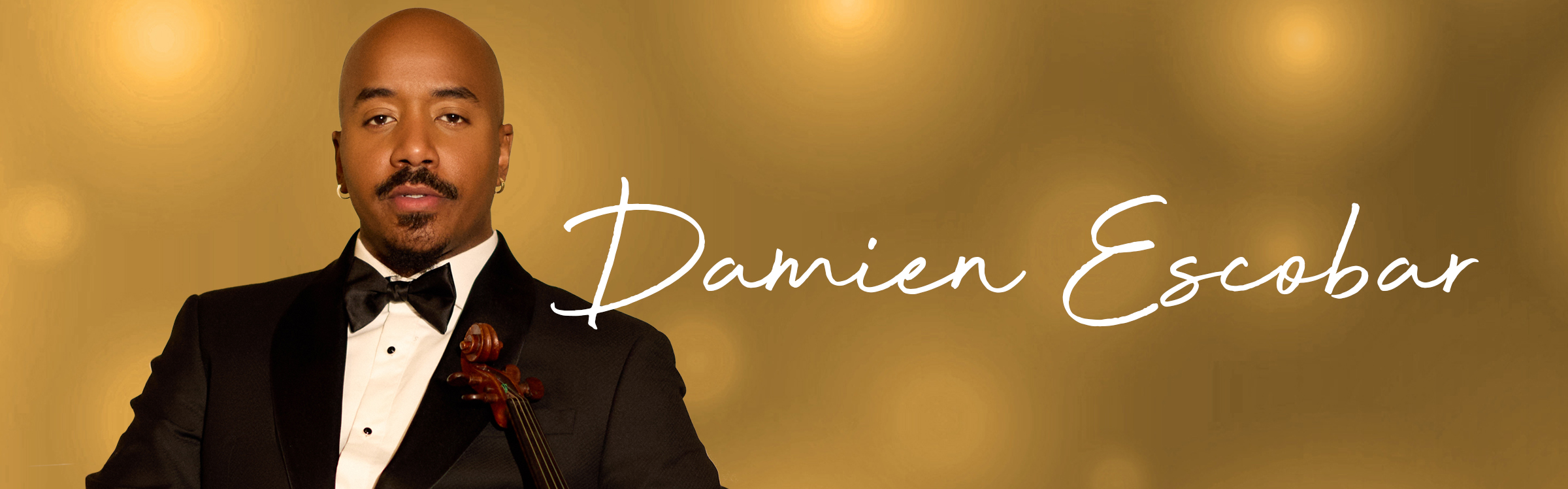
Damien Escobar

The Rebirth of an Artist:

The Damien Escobar Experience

Damien Escobar is a multi-platinum global recording artist, two-time Emmy Award-winning violinist, creative executive, entrepreneur, and speaker whose career has been defined by challenging convention and expanding what’s possible across music, culture, and business.

Hailed as one of the most influential male violinists of his generation, Escobar has spent more than two decades redefining the role of the violin in popular culture. First as co-founder of the groundbreaking group Nuttin’ But Stringz and later as a solo artist, he has topped Billboard charts, sold out tours around the world, and performed for U.S. Presidents, world leaders, and cultural icons including Barack Obama, Oprah Winfrey, Michael Jackson, and U2. As a solo artist, his concerts have become known as “emotional exchanges,” experiences where audiences come for the music and leave transformed.

But Escobar’s career has never been defined by a single lane.

After Nuttin’ But Stringz disbanded in 2012, he lost nearly everything he had built. Within months, he went from performing on global stages to welfare, friends’ couches, and sleeping on New York City subways. Escobar eventually returned home to Jamaica, Queens, rebuilt his career from a basement bedroom, and emerged as an internationally successful solo artist. That experience would shape a philosophy that continues to guide his life: resilience isn’t about bouncing back. It’s about building forward.

Years later, during COVID, curiosity took Escobar from the stage into the world of marketing. What began as a short-term freelance opportunity at Arnold Worldwide evolved into a meteoric rise through Havas, one of the world’s largest communications companies, culminating in Escobar becoming the first Global Chief Music Officer in communications history.

In that role, Escobar has challenged the traditional role of music in marketing, championing it not as a production afterthought but as a strategic driver of creativity, culture, emotional connection, and business growth. He went on to found and become CEO of Art of Sound, a culture-forward creative studio within Havas that has become one of the company’s fastestgrowing businesses, expanding across North America, the United Kingdom, and Europe.

Escobar is also the founder and CEO of VOLYUM, created in partnership with Virgin Music Group, where he is pioneering new models at the intersection of artists, brands, entertainment, original intellectual property, and culture.

Today, Escobar continues to release music and tour globally while leading businesses, building new platforms, and speaking to audiences around the world. His perspective on reinvention, resilience, innovation, creativity, leadership, and the courage to challenge convention is grounded not in theory, but in a career repeatedly built, disrupted, expanded, and rewritten.

Across every chapter, Escobar’s work is connected by a singular belief: you don’t have to become someone else to become something more.

Artist links

Richard Elliot

CHART-TOPPING GRAMMY-NOMINATED CONTEMPORARY JAZZ PIONEER

RICHARD ELLIOT

DELIVERS NEW MUSIC FROM THE HEART AND IT’S STRAIGHT UP DOWN HIS BEST YET

Nine-Track Voyage Unites Elliot with All-Star Unit Including Labelmates Paul Brown and Euge Groove & Features Originals Plus A Surprising Jimmy Jam & Terry Lewis Hit

If you are one of the lucky ones, you can recall a moment in time when a portal to an entire new world was opened for you, and a fire was lit within. For Richard Elliot, that moment was when his sister, ten years his senior, took a leap of faith and invited him to listen to her record collection. The only caveat was that he takes good care of her records and put them back where they belong. Elliot not only took good care of the music, but the music has been taking care of him for over four decades. The chart-topping Grammy-nominated saxophonist recalls, “My sister had everything from Joni Mitchell, Carlos Santana and Dave Brubeck to Smokey Robinson, The Temptations and The Four Tops. I got a chance to be exposed at a young age to a lot of great music.” That inspiration ran deep, and Elliot went on to work with all three of the aforementioned Motown legends. His enviable credits also include a five-year stint with the funk and soul horns of Tower of Power and when he was just a lad worked with Natalie Cole and the Pointer Sisters. A man of many talents, Elliot, who once moonlighted as a software engineer, is also a pilot. In fact, the saxman is in the process of building his own two-seat plane in his garage. On September 6, 2024, the Scottish-born, LA raised and San Diego based renaissance man will release his 21st recording as a leader, Straight Up Down, on Shanachie Entertainment. He shares, “I feel incredibly fortunate that I am allowed to do this as a career and even more grateful that I have been able to do it for as long as I have. It’s all about being honest and truthful in my music and never taking it all for granted.” Elliot provides maximum cruise control on Straight Up Down, an inspired collection of nine tracks, eight of which are originals. The album’s solid and alluring material shine a light on Richard Elliot’s signature soulful and bluesy approach which seamlessly combines his technical prowess and unbridled passion with the finer elements of Jazz, Blues, Pop, R&B and Rock.

Straight Up Down opens with the winning new single “Very Delicious,” a sumptuous and spirited affair reminiscent of the bluesy soul of John Handy’s 1970s hit “Hard Work.” The selection of “Very Delicious” as an album opener is perfect as Elliot’s supple and agile tenor lines twist and turn to delight elevating the mood and urge you to join in and clap along. “When Jeff Carruthers sent me the track,” he explains, “what I set out to do was come up with a melody that was kind of more hooky. The song is a bit nostalgic, and I love things that are nostalgic. I always feel that it’s important to pay homage to what came before us and to choose vibes, grooves and melody lines that speak to where the genre started.” “Driftin’,” not to be confused with Herbie Hancock’s composition, is a sultry mid-tempo affair that showcases Elliot’s stunning tone dancing alongside an oscillating groove propelled by drummer Trevor Lawrence and percussionist Lenny Castro. The track was produced and mixed by labelmate and fellow tenorman, Euge Groove, who also produced and mixed “Very Delicious.” “Euge and I have been friends for decades,” Richard shares. Before he did any solo work, he was the person that I recommended to take my place in Tower of Power and because of that we have a real connection and history together.” Straight Up Down is the first time Euge and Elliot have worked on a record together. Elliot adds, “We had just a great time working together, and this was a very special collaboration for me.”

Straight Up Down also features the captivating “Double Trouble,” co-written with Shane Theriot who is featured on keys, bass, guitar, and drums. Elliot reflects, “It’s a bit retro and has the vibe of the old CTI recordings where it’s about establishing a mood and keeping the melodies very lyrical and straightforward while at the same time remaining a bit minimalistic.” The album’s title track is inspired by Richard’s motto to keep it real and live authentically. It is also a word play on the terms “straight up” and to be “down,” which both infer being truthful or emphatically in agreement. “I am inspired to play and create music by everything including what is going on in my life, society, or my community. I just try to be sincere,” he explains. The album’s title track, produced, by guitarist and labelmate Paul Brown (who plays percussion on the track) is a standout with its gorgeous crisp melody, air-tight groove and slick chord changes anchored by Jeff Carruthers on keys, guitar and drums and Roberto Valley on the bass. Straight Up Down features one lone cover, “Tell Me If You Still Care About Me” featuring the masterful arranging and production of Kevin Flournoy. The Jimmy Jam and Terry Lewis song was a Top five Billboard hit in 1983.  “I have always been a big fan of The S.O.S. Band and an extremely big fan of Jimmy Jam and Terry Lewis. When that band came out, that they had a unique sound that didn’t sound like anyone else,” shares Elliot. “High Tide” is another sublime collaboration between Elliot and Paul Brown. Their unbounded joy and telepathic interplay are undeniable. Richard explains, “Paul and I have a history that goes back decades. When it’s the right collaboration, you have a comfort level where you anticipate each other’s moves. At the same time a good producer pushes you out of your comfort zone and I think that’s what’s nice about working with Paul.” The dazzling “Beautiful” is a tribute to Elliot’s wife Camella. “I always dedicate at least one song to her on every record,” he shares. “The song makes me visualize a beautiful sunset and watching the day come to an end as I look up at the sunset exhaling.” Straight Up Down also showcases the laidback but snappy swinger “Freestyle” and “As The Day Fades,” which brings Elliot’s thrilling sonic journey to a conclusion as he floats out atop a funky R&B groove.

“Dexter (Gordon) is still my guy. I was around 18 years-old when I went to a club called Concerts By The Sea in Los Angeles. It was truly a life changing moment for me,” shares Richard Elliot. “This big man came out on stage with this low voice and this huge tenor sound. I had already been playing for a few years but when I heard him, I thought to myself ‘I’m doomed. I will never ever come up with a sound anywhere near this guy.’ It really was life changing to hear him play.” Inspired by Dexter and the likes of other tenor legends like Johnny Griffin, Gene Ammons, Coleman Hawkins, Grover Washington Jr. and Michael Brecker, Richard Elliot has managed to carve out this own niche out of his rich caldron of influences. Richard Elliot has scored more than 20 Top 10 Smooth Jazz singles and #1 Contemporary Jazz albums. His debut solo album, Trolltown was released in 1986 and shortly thereafter he began a fruitful relationship with Bruce Lundvall and was signed to Blue Note Records. A few of his other stand out releases include 2016’s Summer Madness albums including On The Town, Soul Embrace, After Dark, and Jumpin’ Off. His 2013 collaboration with saxophonists Dave Koz Gerald Albright and Mindi Abair, Summer Horns. Elliot’s last recorded Authentic Life was released in 2021 and joined together an A-list line up including Rick Braun, Dave Koz, Jeff Lorber, Chris “Big Dog” Davis, Philippe Saisse and. David Mann

The ultimate family man, Richard Elliot confides, “I love spending time with my family. My wife and I have five children and it is a joy watching them pursue their careers and their lives.” He is also a self-proclaimed foodie. He and wife Camella enjoy the pursuit of discovering new places to eat. Richard and his wife also run a foundation that donates to worthy causes that benefit youth and young adults including the Juvenile Diabetes Foundation, St. Judes, and the San Diego area dance organization TranscenDANCE. With the release of Straight Up Down Elliot concludes, “If there’s a few people out there that enjoy or feel impacted or moved by what I do, then I feel like I’ve accomplished something. If my music affects them in a positive way, then I am happy.”

For more information, please contact Monifa Brown (646) 886-5629/mbrown@shanachie.com

Artist links

Rick Braun

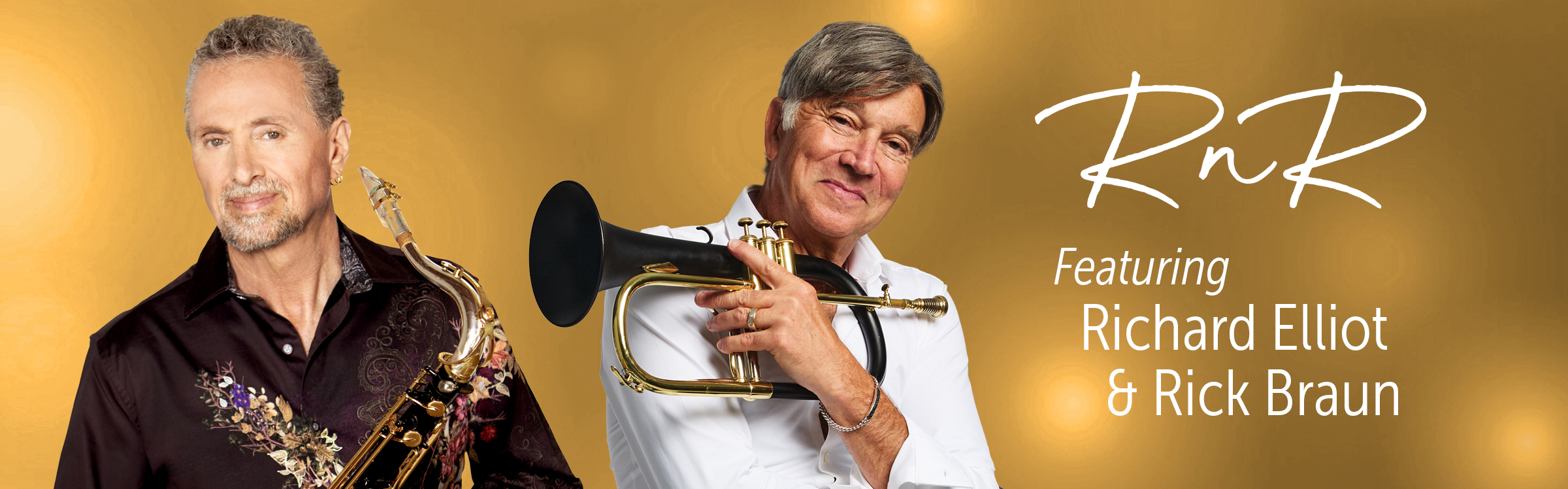
RICK BRAUN Over three decades, 20+ albums and more than 20 #1 Billboard hits into one of contemporary jazz’s most inspiring careers, Rick Braun remains a master of the trumpet and flugelhorn. The Allentown, Pennsylvania-born Braun began playing music in elementary school, ultimately winding up at the prestigious Eastman School of Music. There he hooked up with like-minded musicians to form the jazz-fusion combo Auracle. Braun’s first big break came when he composed “Here With Me,” a Top 20 hit for REO Speedwagon. He soon became a highly regarded pop sideman, touring and recording with the likes of Rod Stewart, War, Sade, Tina Turner, Natalie Cole, Glenn Frey, Tom Petty, and Crowded House. The trumpeter became a Smooth Jazz fixturfe with his 1993 debut, Intimate Secrets, and broke through with 1995’s Beat Street. His records have consistently ranked in the Top 10 of Billboard’s Contemporary Jazz Chart, with Kisses in the Rain reigning at #1 for 11 weeks. The recipient of numerous awards, he shared a Best Collaboration honor with Boney James for their hit Shake It Up, and his duo project RnR with Richard Elliot also hit #1. He’s recorded three albums with the all-star trio BWB alongside Grammy winners Kirk Whalum and Norman Brown. A much-in-demand producer, he has delivered #1 radio hits with artists including David Benoit, Marc Antoine, Peter White, and the late Jeff Golub. His most recent release, Rick Braun Plays Chuck Mangione, is his first-ever tribute album, honoring one of his musical heroes. Braun says with a grin, “I am one of the luckiest guys in the world. I mean, when you really think about it, I make my living blowing into plumbing.”

Artist links

David Benoit

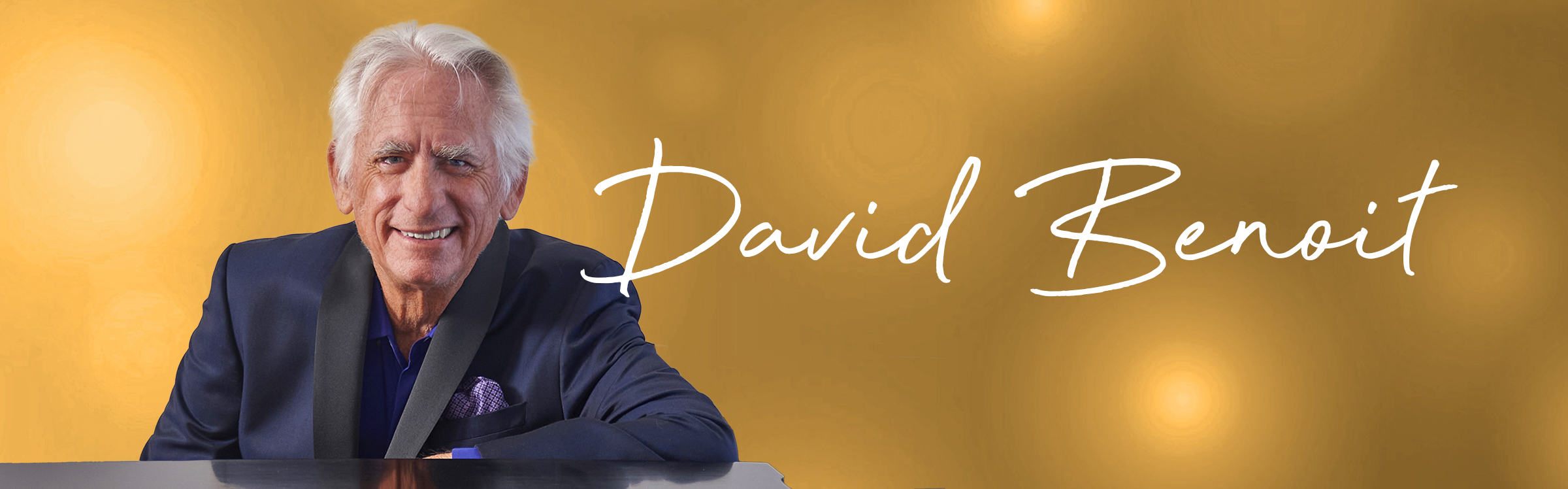
For four decades, the GRAMMY®-nominated pianist/composer/ arranger David Benoit has reigned supreme as one the founding fathers of Contemporary Jazz.

When he was coming up, Benoit worked with singers Patti Austin, Connie Stevens, Ann-Margaret, and Lainie Kazan as her musical director/conductor. In 1976, Benoit released albums on the AVI label from 1977 to 1984. He later released several chart-topping recordings for GRP, including Freedom at Midnight (1987), Waiting for Spring (1989) and Shadows (1991), which both topped Billboard’s Contemporary Jazz Charts at #5, #1, and #2, respectively.

His other noteworthy recordings include Letter to Evan (1992), his tribute to another piano influence, Bill Evans, and Here’s to You, Charlie Brown: Fifty Great Years (2000). Benoit also recorded with Russ Freeman on their album The Benoit/Freeman Project (1994), and on their follow-up collaboration, 2 (2004), which was released on Peak Records. His other recordings for the label include American Landscape (1997) and Orchestral Stories (2005), which featured his first piano concerto, “The Centaur and the Sphinx,” and a symphonic work, “Kobe”.

He has received three GRAMMY® nominations in the categories of Best Contemporary Jazz Performance for “Every Step of the Way” (1989), Best Large Ensemble Performance for GRP All-Star Big Band (1996), and Best Instrumental Composition for “Dad’s Room,” the latter from the album Professional Dreamer (2000). He has also worked with an impressive potpourri of musicians including the Rippingtons, Emily Remler, the late Alphonse Mouzon, Dave Koz, Faith Hill, David Sanborn, CeCe Winans, Keiko Matsui, Hiroshima, and Brian McKnight.

David’s career as a contemporary jazz pianist began in 1977 and includes 41 solo recordings over the past 40 years. Many of these, including his 1987 GRP Records debut “Freedom at Midnight” and its Grammy nominated 1988 follow-up “Every Step Of The Way”, are considered influential classics in the genre. Among his other Grammy nominations are those for Best Instrumental Composition (for “Dad’s Room” and 1999’s Professional Dreamer), Best Large Jazz Ensemble Performance (GRP All-Star Big Band) and voted “Keyboardist of the Year” in 2000 and 2001 by the Oasis Contemporary Jazz Awards, and on Billboard’s Contemporary Jazz Chart. David’s latest release,Timeless (2024), is his first all big band recording featuring the London based Spice Fusion big band.

Benoit has also been a popular film and television composer. His most notable film scores are The Stars Fell on Henrietta, produced by Clint Eastwood and starring Robert Duvall; and The Christmas Tree, produced by Sally Field, voted Best Score of 1996 by Film Score Magazine; His association with Charles Schulz and the famed Peanuts realm led to over 10 years composing music for the Peanuts TV special on CBS. In addition, he has written themes for the long running soap opera All My Children (ABC) and Sisters (NBC) and scored the “Movies of the Week” Final Descent (with the late Robert Urich) and Cadillac Jack (Starring Clint Black). In collaboration with lyricist Mark Winkler, David completed his first Broadway musical, Something’s Got To Give about the life and times of Marilyn Monroe.

He has served as conductor with a wide range of symphonies including the Los Angeles Philharmonic, San Francisco Symphony, Atlanta Symphony, Dresden Philharmonic, London Symphony, Nuremberg Symphony, Philippine Philharmonic, Toledo Symphony, New World Symphony Orchestra, San Antonio Symphony, National Symphony Orchestra, Long Beach Symphony “Pops” Orchestra and of course, theAsia America Symphony Orchestra, to name a few. Piano performances have included Claude Bolling’s Suite for Flute & Jazz Piano, Suite for Cello & Piano, Concerto for Guitar & Jazz Piano Trio with Angel Romero, guest soloist with Lalo Schifrin and his orchestra and as a tribute to Charles M. Schultz, performed the Peanuts Piano Concerto and the music of Vince Guaraldi in conjunction with his recording of Here’s To You, Charlie Brown: 50 Great Years

A long-time guest educator with the Mr. Holland’s Opus Foundation, he received that organization’s Excellence in Music Award in 2001. His musical selections have been featured on The Weather Channel such as his version of Vince Guaraldi’s “Cast Your Fate to the Wind”. At the age of thirteen, Benoit studied privately with pianist Marya Cressy Wright and continued his training with Abraham Fraser, who was the pianist for famed conductor Arturo Toscanini. He also studied music theory and composition, and later studied orchestration with Donald Nelligan at El Camino Junior College and film scoring from Donald Ray at UCLA. He studied conducting from Heiichiro Ohyama, assistant conductor of the L.A. Philharmonic, and furthered his musical education with Jan Robertson, head of the conducting department at UCLA, and UC Santa Barbara symphony orchestra music director Jeffrey Schindler.

A career highlight of Benoit’s was the opportunity to conduct a performance of Beethoven’s Ninth Symphony with The Asia America Symphony and a 200 piece chorus at the Walt Disney Concert Hall in 2008.

David Benoit currently hosts a morning radio show on KKJZ 88.1 FM, CA, and continually tours & records and is composer in residence at Montalvo Arts, the Music Director a & Conductor for the Asia America Symphony Association. David and wife Kei reside in Laguna Niguel, California.

Artist links

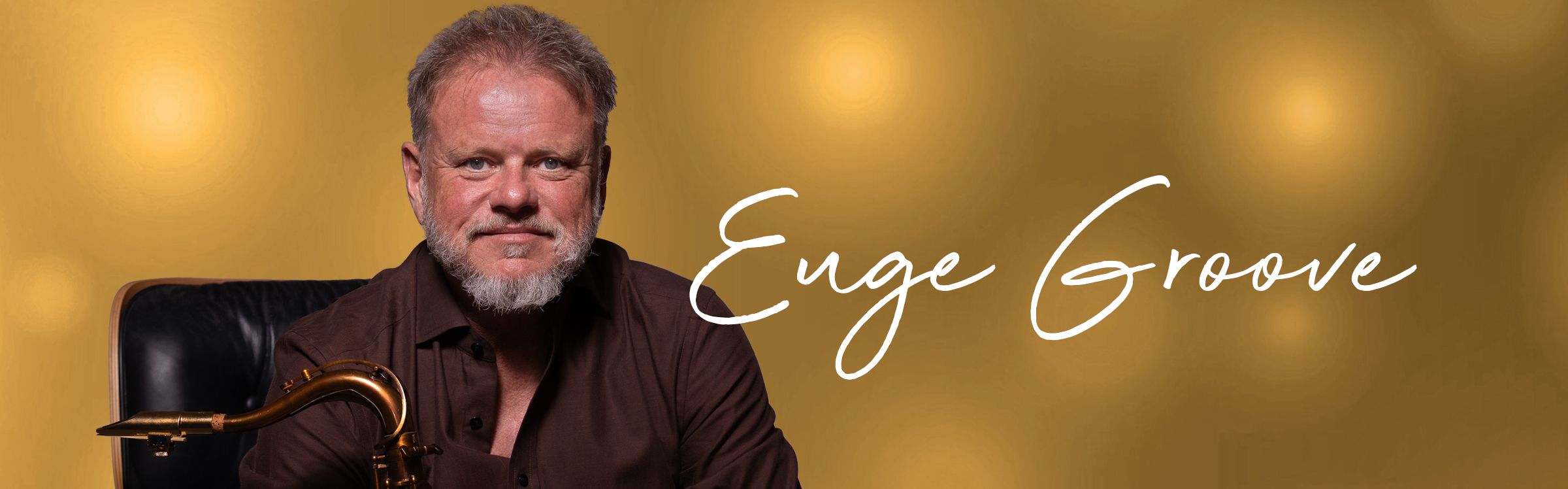
Euge Groove

Chart-Topping Saxophonist Euge Groove Ascends to New Heights

on Long-Awaited and Triumphant New Recording Finding Resilience,

Joy and Peace on THE PHOENIX Available Everywhere July 17, 2026

“I am The Phoenix!” exclaims Steven EUGEne GROoVE. “After all that has happened in my life over the last several years, I literally am The Phoenix! In the story of the Greek Phoenix, he lived an amazing life, which is why he was reduced into ashes from flames of bright, vibrant colors. His transformation was meant to take his life to the next level to live out eternity.  Sometimes you have to burn it all down and rebuild to get there.” Euge Groove’s highly anticipated new album, The Phoenix (a follow-up to 2023’s lauded Comfort Zone), is not merely a new recording from one of Contemporary Jazz’s luminaries but it is a bold declaration of the evolution of a man, musician and spiritual being. Having recovered from life-saving open heart surgery—aided by his remarkable Bernedoodle, Odysseus, a service dog trained in cardiac alert—there is something serendipitous about Euge Groove’s new album being his fourteenth. In many religions and cultures, the number fourteen is often viewed as a symbol of balance, harmony, and spiritual growth, which are all areas coming into focus for the saxophonist. The Phoenix (available everywhere July 17, 2026) is his most spirit inspired statement yet and it highlights his compelling compositions and keen arrangements. Throughout the recording, his laid-back yet audacious playing rings with a clear, satisfying intention. The prolific musician, who has collaborated with iconic artists ranging from Tina Turner, Tower of Power, and The Eurythmics to Aaron Neville, Huey Lewis, and Joe Cocker, shares: “I really wasn’t sure I was going to get to the finish line on this album. I’m just seeking peace right now. I’m attracted to peaceful people, places, and things, and I think the album reflects that. There is less urgency than in past projects. It is more relaxed and fun. I feel like I’ve returned to the reasons I got into music to begin with.”

Euge Groove admits that his entire life changed in January 2025 after an extensive and harrowing open-heart surgery that came with a prognosis of a year-long recovery. He shares, “I had to crawl to the bathroom holding the heart shaped pillow they gave me to hold when I left the hospital in case I passed out. I was 100% alone in my home, hallucinating, and hearing conversations. Getting through something like that through sheer willpower changed me for the better.” Euge recounts an encounter with a wise older Orthodox Jewish gentleman who passed on some mind-bending information to him. “He told me that the universe gifted me a spiritual awakening, and I believe he is correct,” confesses the saxophonist. “The biggest thing this experience has given me is ‘no fear.’ I even find myself attracted to challenging situations. I equate it to Gary Sinise’s character in Forrest Gump. When he and Forrest are out on the shrimping boat in the middle of a once-in-a-century hurricane, and Gary looks up at God and says, ‘You call this a storm? Come on! You call this a storm?’ No fear. That’s real freedom. Real peace. And the honest truth is, if going through what I went through is the price one must pay for a spiritual awakening, I’d do it all over in a second.”

Euge Groove completed The Phoenix in June of 2024 with the exception of one small detail… “No saxophone!” he laughingly exclaims. “I just didn’t have the energy, and that was for obvious reasons unknown at the time.” To say that Euge got by with a little help from some friends is not just a Joe Cocker song.

He was blessed to collaborate with several longtime friends and musical companions who have been instrumental in his music-making process for years. Keyboardist/arranger Tracy Carter and bassist Corney Mims have worked with Euge Groove dating back to his 2007 album Born 2 Groove.  “I was barely functioning at the beginning of 2024 when Tracy, Corney, and I started the writing in my studio. They saw that I was struggling and said, ‘We got your back,’ and that just meant so much to me. They have been so instrumental in helping to shape the sound of Euge Groove to where it is today.”  Guitarist and labelmate Paul Brown also played a huge role in the success of finalizing the album. “I shouldn’t have been able to put the sax on the album the way that I did. I was only getting 15 minutes at a time at home without having to take a break, and when I pushed it too hard, I was done for the day. I had decided to cut the saxes with Paul Brown like the old days, to take some of the responsibility off of myself. Just play the sax. Well, day one, I cut for four or five hours and not one drop of fatigue. Completely unexplainable. That continued for the entire album.” Trusted musical comrades, drummer Trevor Lawrence Jr., percussionist Lenny Castro, and guitarist Jubu Smith also join Euge Groove on The Phoenix.

The Phoenix opens with the effervescent, buoyant and ethereal R&B number “Heart Of Gold,” showcasing Euge Groove’s penchant for composing unforgettable melodies and his undeniably gorgeous soprano tone. The album title and first single is hard to resist with its driving funk rhythm, burly tenor soul, and its mounting and soaring optimism. It has the triumphant vibe of Bill Conti’s “Gonna Fly Now.” There were many divine and unexplainable moments while creating The Phoenix. Euge recalls that when he recorded “The Phoenix,” after he played the bridge, Paul Brown looked at him and said, “Well, you got your soaring Phoenix bridge!” Ironically, Paul didn’t even know that the song was called “The Phoenix.” In an ode to the mythical “Phoenix,” Euge has 14 feather tattoos, a Phoenix, and Sisyphus and the eternal Bolder on his body with plans to add four more (you can see some images in the album packaging). “They are a reminder of what I need to achieve in the remainder of my days in this dimension and the next. New Year’s resolutions can last a day. Tattoos are forever,” states Euge. The R&B-infused “Wrapped Around Your Finger,” dedicated to his first granddaughter, showcases Euge’s resplendent tone and flawless runs, creating an emotion filled musical journey that transitions into a cathartic quiet storm anthem that easily pulls on your heartstrings. The wistful waltz “Those Nights Alone” finds Euge Groove bearing all as he pours his soul into each and every note on his resonant tenor. His ability to stir deep emotion and summon quiet reflection come into sharp focus on this unforgettable ballad.  

The Phoenix would not be complete without the euphoric, rhythm-happy and life-affirming tribute “Odysseus,” Euge Groove’s remarkable service dog, who has been a consummate friend, support, and inspiration during the saxophonist’s journey. The buoyant and percolating groove captures the love Euge holds for his Bernedoodle. The layering of Euge’s sax and the driving rhythms of the tune unleash the uncontainable celebration “He is never more than ten feet away from me and always has an eye on me. He literally saved my life when I got him. I needed him more than I ever knew,” shares Euge. “I credit him with literally saving my life in every way imaginable. God put him in my life when he was only nine weeks old, and it was very early on in my yearlong recovery. I could barely handle him. One day, I just closed the door to my bedroom with him in there, crashed on the bed, and said I’ll just wing it. The universe new exactly what it was doing when he put Odysseus on my doorstep. It new exactly what I needed in my life.”

The ballad “Better Days” is a poignant reminder of the power of enduring hope while the sultry and bluesy “For the Love of the Game” remind us how much of a master Euge Groove is at story telling as his sax trills and thrills, stops and bursts with joy, ease and fluidity. The Phoenix also features the arresting “At Peace.”

This masterpiece creates one of the most moving moments on the album with its cyclical anchoring chord progression and melodic structure that serves as an affirmation as Euge’s saxophone preaches the spirit of serenity that graces each and every note he summons. Euge recalls, “At Peace” was an exceptionally special moment and intimate moment during the recording. “I have always written and cut every song in the order that it appears on the final album but this time, I put off ‘At Peace’ until the last song. I had no idea what to do with it. It’s a great vibe, but the form is odd, even though the time signature is 4/4. When it was time to record, I sat on Paul’s sofa in his studio and would try to pick a good reed and warm up while the track is playing in the background. Finding a reed for me can be a 30 minute or more drama filled with lots of cursing. I slapped a reed on, started to blow, and about 90 seconds later, I told Paul I better get in front of a microphone. He agreed. One take, and that was it. I had no idea what I was going to play beforehand. I truly believe the Universe used my body to play that song.” Also showcases on the album is the bopping groove of the up-tempo swinger “Lil’ Man” a nod to his home’s other dog, Romeo, which delights and the fancy-free, soul drenched vibe of “Devil My Care.” The latter is the perfect conclusion as The Phoenix nods to Euge’s newfound freedom and his pursuit of peace and joy.

A graduate of the University of Miami’s School of Music, Steven Eugene Grove (better known as Euge Groove) was born in Hagerstown, Maryland, and grew up in a musical home. His mother played the piano and taught the Cherub choir at Christ Lutheran Church. He began his own musical pursuits at age seven, starting with the piano and adding the saxophone at nine. It was in elementary school where he discovered that music was his true calling. “In fifth grade, I thought I’d be in school band the rest of my life.” He later discovered two saxophonists who had a profound effect on his approach to playing. “One was French classical player Marcel Mule, who really defined what the sax was supposed to sound like for me, and the other was David Sanborn, who took that sound and brought it into the mainstream world,” Euge reminisces. Explaining his varied influences, he notes, “I’ve listened to everyone from Grover Washington, Jr. and David Sanborn, to Charlie Parker and John Coltrane, as well as Michael Brecker, Stan Getz, King Curtis, Junior Walker, Richard Elliot, and Kirk Whalum. The thing is, the more mature we become, the more those influences fuse into something new. I always listened to a lot of R&B growing up, fused that with pop music, and then with gospel. Hopefully, all these influences come through in my music, and I am able to create my own unique expression.”

With the release of The Phoenix, Euge Groove is looking forward to hitting the road and playing a few of the cuts from the new album live. “I am going out with a new objective; having fun! I want to do shows because I want to, not have to. Making music is an extremely selfish endeavor. You’re basically making music that you personally would like to listen to. The fact that someone else shares my view of it the same way is an unexplainable high. Truly a gift from the universe that doesn’t go unnoticed by me.”

For more information, please contact Monifa Brown (646) 886-5629/mbrown@shanachie.com

Artist links
Al Turner

Bass guitar impresario, Al “The Burner” Turner has played professionally since the early ’80s. Recording and working with Earl Klugh since 1994, he is also the musical director for Earl Klugh and KEM. Al has recorded with artists including Aretha Franklin, Anita Baker, Earl Klugh, Oleta Adams, Nancy Wilson, Bob James, Randy Crawford, Ron Isley, Patti LaBelle, and Gladys Knight. Anita Baker proclaims, “The Burner holds it down. Locks it up right and tight.” and R&B Superstar KEM calls Al Turner, “the baddest bass player in the world.” Turner maintains an unbelievable schedule, touring with Bob James, Oleta Adams, KEM and Klugh. Al’s nationally successful fifth CD is This Is. His artistry exceeds category and has been featured in many television and radio commercials.

Artist links

Ron Otis

Ron Otis grew in Detroit Michigan and at the age of five discovered drums and never looked back. By 16, Ron was playing in local clubs around the Detroit area. He has been working and recording with Earl Klugh since 1994 and has also performed and recorded with the very best in the music world including Nancy Wilson, Aretha Franklin, KEM, Bob James, Keith Washington, and R&B singer Tyrese. Ron maintains a busy touring schedule performing with Earl, KEM, and Bob James while making time for his session work. With a desire to try music writing and producing, Ron released his debut album Up Front in 2009. He wrote or co-wrote 8 of the 9 songs on the album. Ron again displays his writing, producing and playing chops with his CD, Stay in Your Lane which travels the musical road map featuring wonderful original Contemporary Jazz and R & B tinged vocal tunes along with a great re-imagination of the Marvin Gaye classic “I Want You.”

Artist links

Tom Braxton

International Billboard charting jazz saxophonist Tom Braxton has garnered critical acclaim while thrilling audiences of all ages from coast to coast and abroad for over two decades.  From Africa to Japan…from New York to L.A., Braxton’s distinct, melodic sound leaves audiences astounded, clapping, and on their feet screaming for more!  His music can be heard on radio and television airwaves nationwide, and his albums have hit numerous jazz charts including Billboard, RadioWave, SmoothJazz.com, Groove Jazz Music, Capital Jazz Radio, and Amazon. 

That’s why Jazz Review calls Braxton “one of smooth jazz’s most prolific saxophonists…with all the required tools to become a major force.”  In the summer of 2020, Braxton signed with Innervision Records and released a single entitled “Lookin’ Up.”  This fun, upbeat track was written and produced by Los Angeles keyboardist Herman Jackson.  Tom’s second single, “Hope for Tomorrow” features the jazz icon Bob James.  Both singles landed on the Smooth Jazz Billboard Chart, and ranked #1 on Amazon’s Best Seller and New Releases list! Tom’s album, also entitled Lookin’ Up, was released on August 6, 2021.

In the summer of 2023, Braxton released his latest single, “Hub City Jam” featuring Rick Braun. This lively funky groove, produced by Blake Aaron, was inspired by his love for his hometown of Lubbock, TX. Upon release, the single was added to Spotify’s popular “New Smooth Jazz” playlist as well as Pandora’s “New Smooth Jazz Today” playlist.

Additionally, this versatile instrumentalist has recorded ten albums including The Other Side (2016), The Next Chapter (2014), Endless Highway (2009), and Imagine This (2007) on the Pacific Coast Jazz label and Bounce (2005) on the Rendezvous label.  The Next Chapter features Grammy winners Bob James, Earl Klugh, and Ricky Lawson, as well as one of Smooth Jazz’s most beloved guitarists, Peter White. They all lend their amazing talents to stellar duets with Tom’s lyrical saxophone.

Tom was inducted into the West Texas Walk of Fame in 2017.  He has also been a featured artist and fan favorite on the Smooth Jazz Cruise for 15 years.  This charismatic performer has been a headliner on the Algarve Smooth Jazz Festival in Portugal, the Mallorca Smooth Jazz Festival in Mallorca, Spain, the Stanbic Jazz Festival in Ghana, the Smooth Jazz Europe Festival in the Netherlands, and the Nile Gold Jazz Safari in Uganda.  He was also showcased on the Java Jazz Festival in Jakarta, Indonesia.  Braxton toured with Earl Klugh in the U.S., with past tours in South Africa, Malawi, Mozambique, Ghana, and Japan.  He has also performed with Keiko Matsui in Russia, Eastern Europe, Malaysia, and Japan.

For 17 years, Tom toured extensively with Wayman Tisdale as his Musical Director.  Braxton has shared the stage with many great artists including Dave Koz, Rick Braun, Peter White, Brian Culbertson, Marcus Miller, Candy Dulfer, Warren Hill, Bob James, Lee Ritenour, Paul Brown, Paul Jackson Jr., George Duke, Kirk Whalum, Jonathan Butler, Jeff Golub, Norman Brown, Sheila E., Aretha Franklin, Luther Vandross, and Philip Bailey.  He has been featured in media and publications such as JAZZIZ, Smooth Jazz News, The Saxophone Journal, CBS’s The Saturday Early Show, Ugandan Television, and Daystar Television Network.

www.TomBraxton.com

Artist links